The best grocery list comes from a meal plan, not from walking the aisles hoping for ideas. Choose the week's meals above and the list is built for you: amounts added up across every recipe, multiplied by the number of people, rounded up to the sizes stores actually sell, and sorted in aisle order.
A list like that does two jobs. You shop once instead of three times, and you stop buying a second bunch of cilantro because you couldn't remember whether you had one. Waste is a bigger leak than most people think: the USDA estimates that 30 to 40 percent of the U.S. food supply goes uneaten, and it names buying or cooking more than you need as one of the ways households add to it.
How does the grocery list maker work?
Every meal in the planner has real single-serving amounts in grams. When you make a plan, the list does the arithmetic you'd otherwise do on the back of an envelope:
- Adds up the week. If three dinners each use some onion, you get one line for onions, not three.
- Scales to your household. The total is multiplied by the number of people you're cooking for. Double batches from Cook once, eat twice are counted too.
- Rounds up to how stores sell things. Grams become 1 lb of chicken, 3 bell peppers or 2 cans of beans. It rounds up so you won't run short, with a small allowance so 460 g of ground turkey stays one 1 lb pack instead of two.
- Sorts by aisle. Produce, meat and poultry, fish, dairy and eggs, bakery, rice and pasta, canned and jarred, frozen, nuts and seeds, sauces, spices.
- Splits out pantry staples. Oil, salt, spices, soy sauce and flour go in a separate Check your pantry list. Tap any you need to buy.
Then add the extras (coffee, dish soap) and print it, save it as a PDF, or copy it as text into Notes or a message.
How to make a grocery list that doesn't waste food
A waste-proof grocery list is short, specific and built in this order:
- Shop the pantry first. Before you plan, look at what needs using: half a bag of spinach, an open jar of marinara, the tortillas from last week. Pick at least one meal that uses it up.
- Pick meals that share ingredients. Two recipes that each need half a bell pepper cost one pepper. Two recipes that each need a different fresh herb cost two bunches, and one usually dies in the drawer. The planner leans toward meals that overlap for this reason.
- Round to the package, then plan the leftover. Stores don't sell 300 g of crushed tomatoes. When the list says one 28 oz can and the week uses about a third of it, decide now where the rest goes.
- Keep a staples list. Write down the 10 to 15 things you always keep (oil, salt, pepper, garlic powder, cumin, soy sauce, rice, pasta, oats) and check them once a week instead of buying them on a hunch.
- Write it in aisle order. You walk the store once, and cold food spends less time in the cart.
A real week: 5 dinners for 2 and the list they make
Here is a five-dinner week from the planner for two people. The meals share onions, garlic, bell peppers, limes, ground turkey and the same two spices, which keeps the list short.
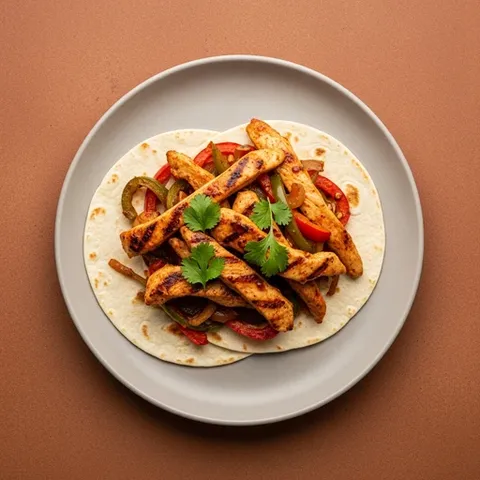
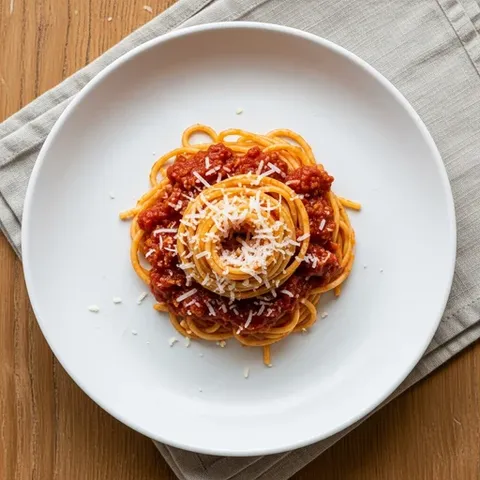
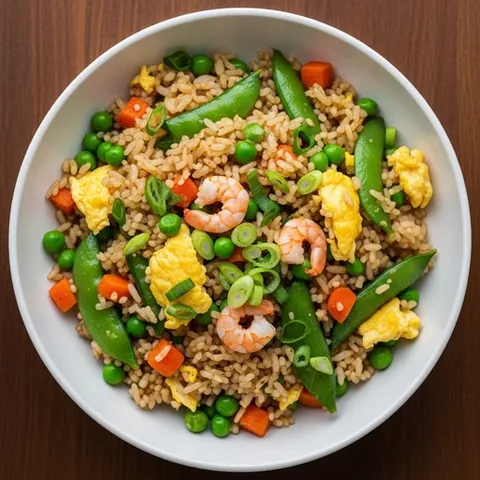
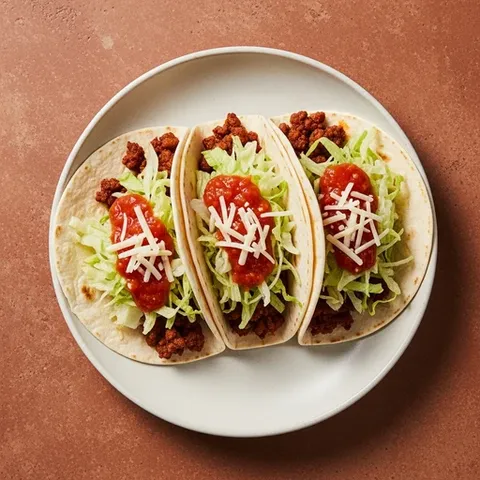
Monday is Sheet-pan chicken fajitas, Tuesday Turkey chili, Wednesday Spaghetti with turkey meat sauce, Thursday Veggie fried rice and Friday Black bean tacos. This is the list the planner writes for that week. "Needed" is the recipe total for two people; "Buy" is what lands on your list.
| Aisle | Item | Needed | Buy | Used in |
|---|---|---|---|---|
| Produce | Bell peppers | 340 g | 3 | Fajitas, chili |
| Produce | Yellow onions | 280 g | 2 | Fajitas, chili, spaghetti |
| Produce | Garlic | 24 g | 1 head | Chili, spaghetti, fried rice |
| Produce | Lime | 60 g | 1 | Fajitas, tacos |
| Produce | Avocado | 100 g | 1 | Tacos |
| Produce | Coleslaw mix | 100 g | 1 bag (14 oz) | Tacos |
| Produce | Green onions | 30 g | 1 bunch | Fried rice |
| Produce | Red onion | 30 g | 1 | Tacos |
| Meat | Chicken breast | 300 g | 1 lb | Fajitas |
| Meat | Ground turkey (93% lean) | 460 g | 1 lb | Chili, spaghetti |
| Dairy & eggs | Eggs | 200 g | 4 | Fried rice |
| Dairy & eggs | Cheddar | 30 g | 4 oz | Chili |
| Dairy & eggs | Parmesan | 16 g | 4 oz | Spaghetti |
| Bakery | Flour tortillas (8-inch) | 180 g | 1 pack of 8 | Fajitas |
| Bakery | Corn tortillas (6-inch) | 208 g | 1 pack of 30 | Tacos |
| Rice & pasta | Long-grain white rice | 140 g | 1 lb | Fried rice |
| Rice & pasta | Spaghetti | 170 g | 1 box (1 lb) | Spaghetti |
| Canned | Black beans | 340 g | 2 cans | Tacos |
| Canned | Kidney beans | 200 g | 1 can | Chili |
| Canned | Crushed tomatoes | 300 g | 1 can (28 oz) | Chili |
| Canned | Marinara sauce | 300 g | 1 jar (24 oz) | Spaghetti |
| Canned | Low-sodium chicken broth | 200 g | 1 carton (32 oz) | Chili |
| Frozen | Frozen mixed vegetables | 140 g | 1 bag (16 oz) | Fried rice |
| Frozen | Frozen peas | 60 g | 1 bag (12 oz) | Fried rice |
| Sauces | Salsa | 80 g | 1 jar (16 oz) | Tacos |
Check your pantry: olive oil, soy sauce, toasted sesame oil, chili powder, ground cumin and smoked paprika. Most kitchens already have four or five of these.
What's left over, and where it goes
Rounding up means some packages come home only partly used. A good list tells you that up front, so the leftovers become next week's plan instead of next week's trash:
- About 490 g of crushed tomatoes. Make a double pot of chili and freeze half, or plan Shakshuka or Lentil bolognese next week.
- About 380 g of marinara. Enough for Pita pizzas or most of a pan of Baked ziti.
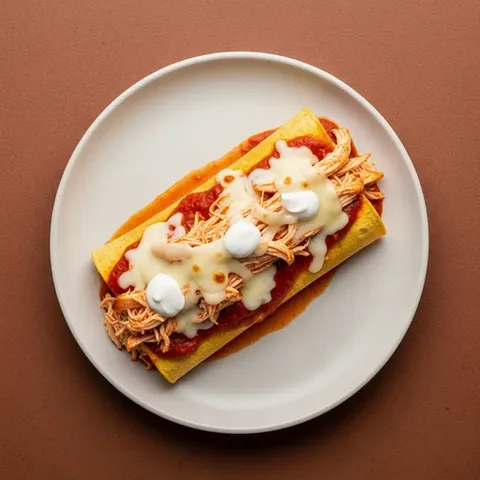
- 22 corn tortillas and 4 flour tortillas. Tortillas freeze well. Turkey tacos or Chicken enchilada bake use the corn ones.
- Three-quarters of the coleslaw mix. Egg roll in a bowl or Vegetable lo mein use it within a few days.
- Most of the broth, rice, spaghetti and frozen vegetables. Shelf-stable or frozen, so they simply move to the pantry list.
If a leftover keeps showing up, swap a meal in the planner for one that shares it. The list updates as you change the week.
Shop for the order you'll cook
Raw chicken and ground meat keep only 1 to 2 days in the fridge, according to FoodSafety.gov's cold storage chart, and fish 1 to 3 days. In this week, the chicken is cooked Monday, but the turkey isn't needed until Tuesday and Wednesday. Brown the whole pound on Tuesday, use half in the chili and refrigerate the rest, already cooked, for Wednesday's sauce. Or freeze half the pack the day you shop. Put fish and ground meat early in the week and pantry meals like the bean tacos last.
What should a grocery list template include?
A grocery list template that works has store sections in walking order, a short staples check list and room for extras. The planner uses produce, meat and poultry, fish, dairy and eggs, bakery, rice and pasta, canned and jarred, frozen, nuts and seeds, sauces and spices. If you shop at one store most weeks, reorder your paper list to match its layout once and reuse it.
For a printable grocery list you fill in by hand, print the week + grocery list template: the week on the left, a lined list column on the right, so you write the ingredients down as you pick each dinner. For a list that writes itself, make the plan above and print it. You get the week on one page and the sorted list on the next.
Grocery list tips that save money
- Plan five dinners, not seven. Most weeks have a night of leftovers or eating out. Plan for it and you buy less.
- Repeat a few ingredients on purpose. One bag of peppers across three meals beats three different vegetables you use once. More of this in eating healthy on a budget and the budget meal plan.
- Use frozen vegetables and canned beans. They don't spoil before you get to them.
- Batch the slow parts. Cook the rice for two meals at once. The meal prep plan shows a full Sunday session.
Want a list that leans toward vegetables, whole grains and beans? The healthy grocery list walks through what to buy aisle by aisle. Or go back to the full meal planner and add breakfasts and lunches; the same list grows to cover them.